
Mood swings before menstruation: Tracking Triggers and Timing
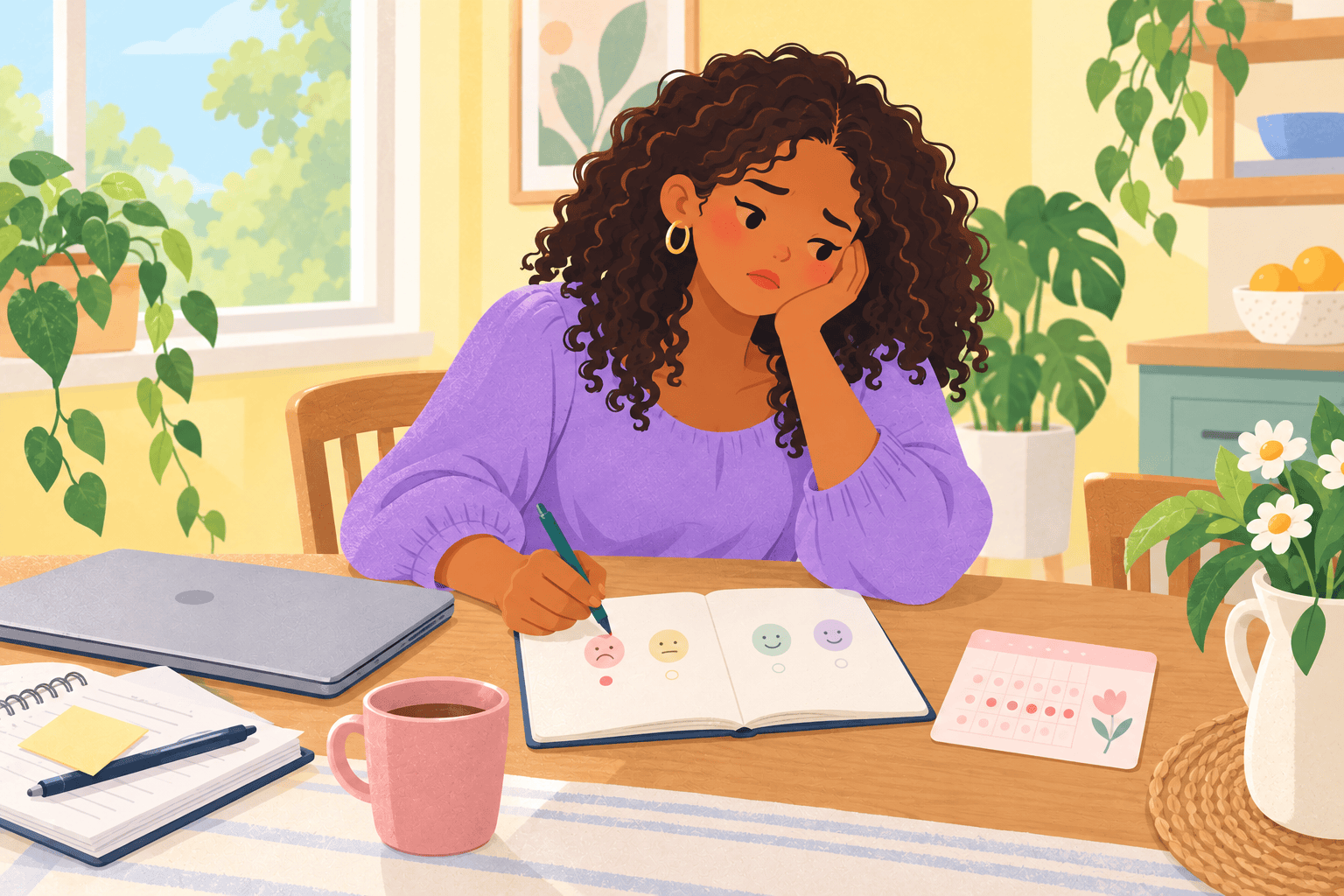
A shift from feeling settled to tearful, tense, or overwhelmed can be difficult to explain afterward. If it happens before your period, recording the timing can help. It does not mean that every feeling is caused by hormones or that the problems you are responding to are unimportant.
Describe the change in your own words
Instead of recording only “bad mood,” choose what you noticed: more easily upset, unusually worried, quick to anger, or unable to enjoy a usual activity. Add one example of the effect on your day.
You might write, “I felt overwhelmed by an ordinary conversation and needed a break.” That observation is useful without judging your character or assigning a diagnosis. The PMS overview explains the broader range of emotional and physical symptoms.
Include days when you feel well
A diary is more informative when it covers the entire cycle, not only the days you expect to be difficult. Record menstrual dates and whether symptoms improve after bleeding begins. Also note sleep, significant stress, illness, and medicine changes.
Mood symptoms present throughout the month can worsen before a period. That may call for assessment of an ongoing condition as well as a menstrual pattern. A diary helps a clinician explore those possibilities; it cannot diagnose PMS or PMDD by itself.
Plan support without predicting a bad week
Choose a small adjustment that fits your life, such as leaving a break between demanding activities or asking someone you trust for a practical favor. Use your notes to plan flexibility rather than assuming you will feel the same every cycle.
If worry is the main difficulty, read PMS and anxiety. If conflict or frustration is more prominent, the irritability guide offers ways to discuss support before a difficult moment.
Get help for the impact
Seek professional support when emotional changes interfere with relationships, work, or daily activities. Treatment can include psychological support and, when appropriate, medicines. Needing care does not mean you failed to manage stress well enough.
If you have thoughts of suicide or harming yourself, seek immediate crisis support. If you may act on those thoughts or cannot stay safe, contact emergency services now. Do not wait for a period to start before getting help.
References

Lifeing Editorial
Stories for a little more understanding, a little more reassurance, and the everyday moments in between.
Related posts
More discharge than usual: What to Track Before Your Appointment