
Pull Ups During Potty Training: Understanding Their Role
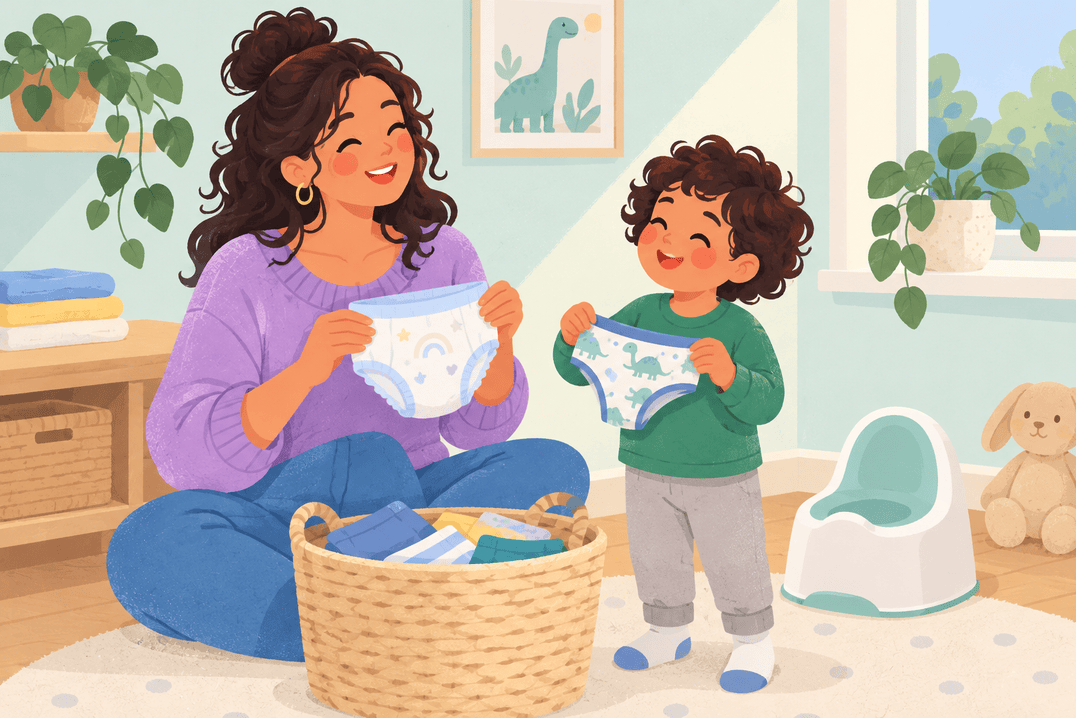
The phrase training pants can describe very different products. Some are highly absorbent disposable diapers that pull up like underwear. Others are washable pants with a small absorbent layer. Knowing which product you mean helps you decide what role it will have in toilet learning.
A product can contain an accident or make clothing practice easier, but it does not teach the whole toileting routine on its own.
Distinguish absorption from a new skill
Disposable pull ups work much like other diapers, even if a child can help pull them down. Reusable training pants may allow the child to notice wetness and can contain some leakage, but their absorbency varies. Do not assume they will hold as much as a diaper.
Check the actual product instructions and fit rather than relying on the word training. Choose clothing your child can manage with help, and keep spare clothes available. More absorbency is not the same as greater independence.
Make the daytime plan clear
Current NHS guidance recommends moving to underwear rather than daytime diapers or disposable pull ups when starting the usual daytime training stage. This gives a clearer opportunity to notice wet and dry. Preparation can happen before that change, and additional needs may require an individual plan.
Our starting routine guide covers regular opportunities and adult assistance. Keep helping with the potty, clothing and hygiene; simply changing the garment is not a complete learning plan.
If home and nursery use different products, discuss why and agree how both settings will support practice. Avoid silently changing the plan from one day to the next without explaining it to the adults involved.
Keep sleep protection separate
A child who is practising in underwear while awake may still need absorbent protection during naps or overnight. Dryness during sleep is a separate process and can follow later.
The nighttime dryness guide explains what to observe and when to seek advice. Do not remove protection as a punishment or offer rewards that depend on a dry night your child cannot guarantee.
Adapt for a specific need without shame
Illness, limited toilet access or an individual continence plan may require a temporary or ongoing adaptation. Make the purpose clear and continue the practice steps that are feasible. Ask a professional for help if the adaptation is becoming indefinite because pain, fear or equipment needs remain unresolved.
A child who will only poop in a diaper needs particular care. Abruptly refusing it may lead to holding stools. Our poop fear guide explains how a supported gradual plan can differ from ordinary daytime training.
Review comfort and progress
Change wet or soiled garments promptly and help your child get comfortable. Do not leave them wet to teach a lesson or treat the product choice as a statement about maturity.
If practice is not progressing, review access, communication, bowel comfort and the help available rather than buying increasingly expensive products. A health visitor or continence professional can help you decide what to try next and how to measure useful progress beyond the number of dry pants.
References

Lifeing Editorial
Stories for a little more understanding, a little more reassurance, and the everyday moments in between.
Related posts

Pulling to stand: Making the Home Safer for New Skills