
Ten month old baby: Encouraging Exploration Without Rushing Milestones
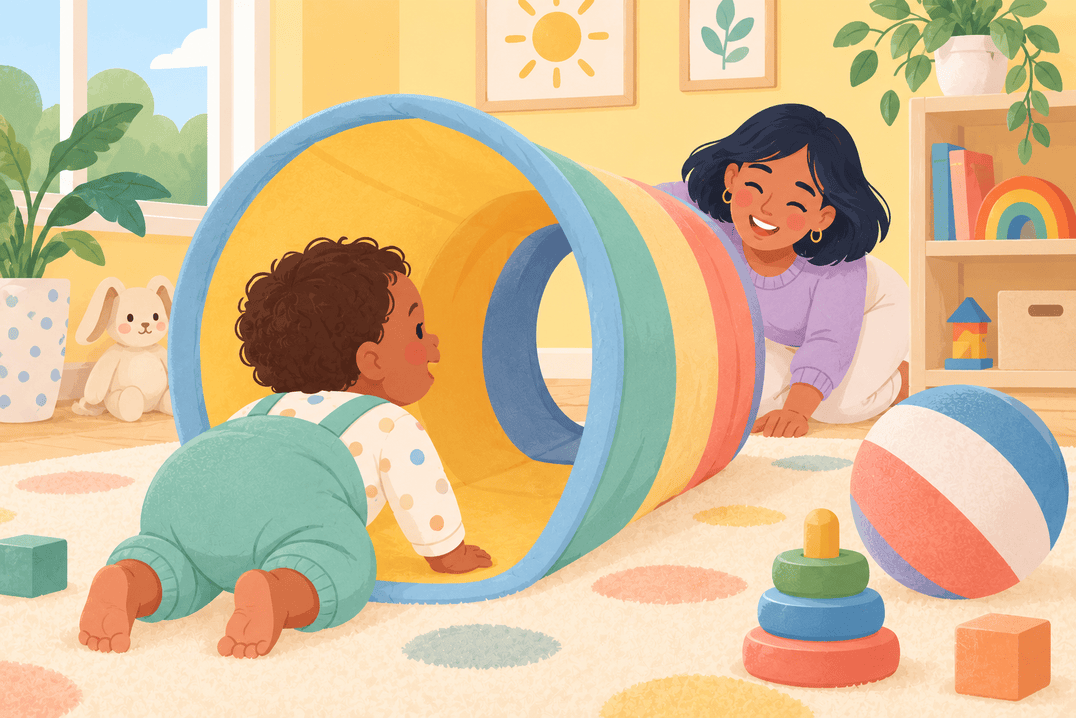
At ten months, exploration may involve travelling across a room, investigating objects from sitting or repeatedly reaching towards the same interesting spot. The useful question is how to support the abilities your baby is using today while keeping earlier concerns visible. Walking is not an entrance requirement for this stage.
Make the space ready before increasing freedom
Secure furniture and televisions properly, following the equipment and fixing instructions. Clear tempting objects from high surfaces and check that a low shelf does not offer a route to something dangerous. A heavy item can still tip, and supervision alone cannot prevent every fall.
Choose an area where you can stay nearby without constantly pulling your baby away from hazards. A room that requires an adult to say no every few seconds may need another safety check. Reconsider the arrangement whenever a new movement changes what can be reached.
Offer objects with something to discover
An intact age suitable container and a few large safe toys can provide an opportunity to put things in, take them out and investigate what happens. Stay involved without doing every action for your baby. If they repeat something that looks simple to you, you can let the repetition continue.
Avoid turning household objects into play materials without checking them. Small detachable parts and accessible batteries remain hazards. Objects used during play should be suitable for mouthing as well as looking and holding.
Keep upcoming milestones in perspective
There is no separate official ten month checklist in the guidance used here. The one year checkpoint includes pulling up to stand and moving while holding furniture, rather than walking independently. Earlier skills from nine months still matter.
Our crawling guide explains why the route through movement can vary. If an earlier expected skill is missing, movement seems difficult or you are concerned, seek advice now. A later milestone should never become a reason to postpone discussing a current problem.
Let hand skills develop without unsafe tests
Your baby may become more precise when picking things up. The thumb and fingertip grasp appears in the one year checkpoint; it does not need to be demonstrated on command at ten months. Our pincer grasp guide covers the progression.
Do not scatter tiny household objects to encourage practice. Emerging precision can make dangerous items easier to pick up, so improved skill calls for greater attention to the floor, not fewer precautions.
Fit meals around participation
At this stage, three meals alongside milk feeds provide a useful pattern. Include varied textures your baby can manage and iron containing foods rather than relying on fruit or snack products alone. Let them explore self feeding while an adult remains close.
Eating still happens seated upright, with food prepared to reduce choking risk. It should not move onto the floor simply because crawling is more interesting. If meals regularly seem painful or difficult, discuss that with your clinician. Similarly, losing any established developmental skill deserves prompt assessment rather than more practice at home.
References
- CDC: Developmental milestones at one year (opens in a new tab)
- CDC: Developmental milestones at nine months (opens in a new tab)
- US Consumer Product Safety Commission: Preventing furniture and television tip overs (opens in a new tab)
- American Academy of Pediatrics: The power of play (opens in a new tab)
- NHS Best Start in Life: Feeding from ten to twelve months (opens in a new tab)
- CDC: Choking hazards and safer food preparation (opens in a new tab)
- CDC: Getting help with developmental concerns (opens in a new tab)
- NHS: Baby and toddler safety (opens in a new tab)

Lifeing Editorial
Stories for a little more understanding, a little more reassurance, and the everyday moments in between.
Related posts
TENS in labor: Setting Realistic Expectations