
Nine month old baby: Movement, Communication, and Meal Practice

Nine months is a useful time to look at the whole picture of development. Movement, communication, play and eating all contribute information. A quiet moment in a clinic may not show what happens at home, so specific everyday observations can make a review more useful.
Notice how skills work together
At the nine month checkpoint, common observations include getting into sitting and sitting without support, moving an object between hands and using the fingers to rake food closer. Communication includes varied repeated sounds and looking when a name is called. Enjoying peekaboo and reacting when a caregiver leaves are also included.
These checklists describe skills most children show by this age. They are not diagnostic tests, and a single missed response does not explain a child’s development. Use the examples to prepare a conversation rather than repeatedly testing your baby until they perform.
Discuss sitting and movement directly
If your baby is not sitting without support at nine months, contact your clinician rather than simply waiting for walking. Mention how they use both sides of the body and whether movement has changed. Our sitting development guide explains suitable opportunities and reasons to seek help.
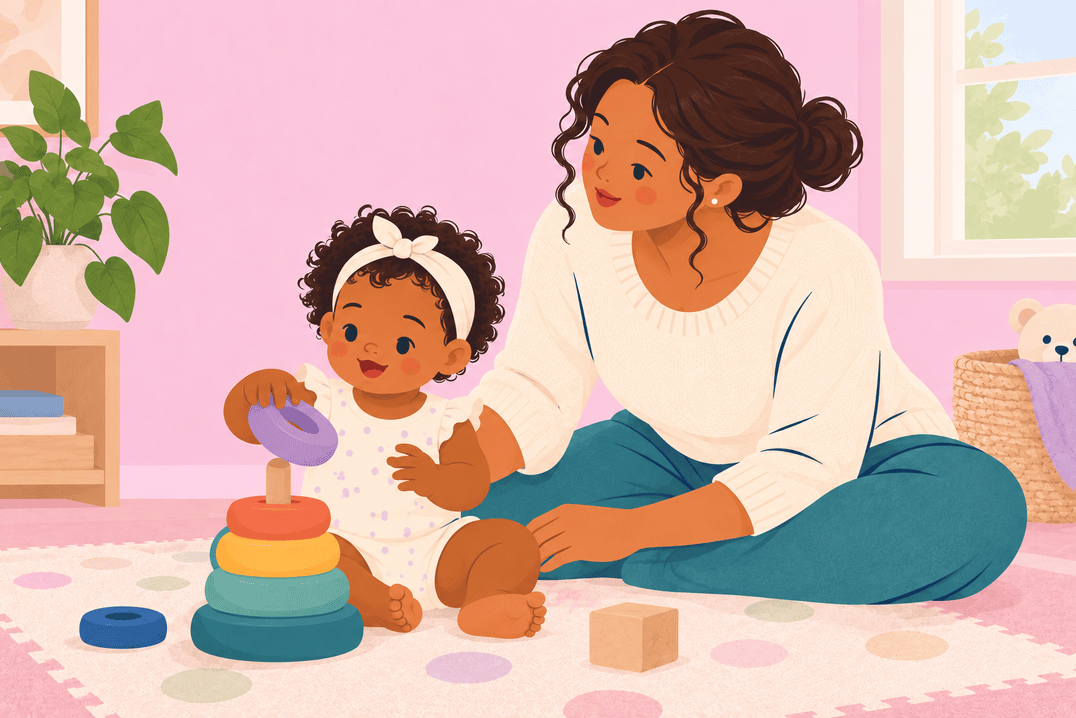
Offer supervised floor play that suits current ability. Keeping a baby propped up for a photograph does not show independent sitting and does not replace an assessment when needed. A professional can help adapt play if your baby has additional physical needs.
Include hearing and social responses
Describe the sounds your baby uses, responses to familiar people and what happens when you call their name during an ordinary quiet moment. Our name response guide explains why this observation needs context, including hearing and other communication skills.
Respond to babble as an exchange, leave pauses and name things you are both attending to. You do not need constant background speech. If a previously used sound or social response disappears, raise that promptly even if other abilities are advancing.
Keep meals suited to learning
Continue milk feeds alongside increasingly established meals. Offer varied foods, including sources of iron, and give opportunities for self feeding. Texture progression should follow ability without becoming permanently restricted to smooth food by default.
Prepare food to reduce choking risk and keep your baby alert, upright and supervised. Repeated coughing or apparent difficulty swallowing warrants advice. Do not treat every feeding problem as a dislike of the menu, or introduce a thickener without a clinical recommendation.
Leave a review with a next step
Ask whether developmental screening is appropriate. In the United States, routine general developmental screening is recommended at nine months; schedules differ elsewhere, and concerns can justify assessment at any time.
If a referral is suggested, check what it is for, who will contact you and whom to call if nothing happens. If you are reassured but remain concerned, ask again with updated observations. Losing skills or having difficulty in daily activities deserves attention before the next scheduled visit.
References
- CDC: Developmental milestones at nine months (opens in a new tab)
- CDC: Getting help with developmental concerns (opens in a new tab)
- NHS Best Start in Life: Feeding from seven to nine months (opens in a new tab)
- NHS Best Start in Life: Preparing food safely (opens in a new tab)
- Communication Health Support Association: Feeding and swallowing disorders in children (opens in a new tab)
- NHS: Helping your baby learn to talk (opens in a new tab)

Lifeing Editorial
Stories for a little more understanding, a little more reassurance, and the everyday moments in between.
Related posts

Nineteen month old toddler: Supporting Communication During Big Feelings