
Twenty eight month old toddler: Playful Ways to Practice New Skills
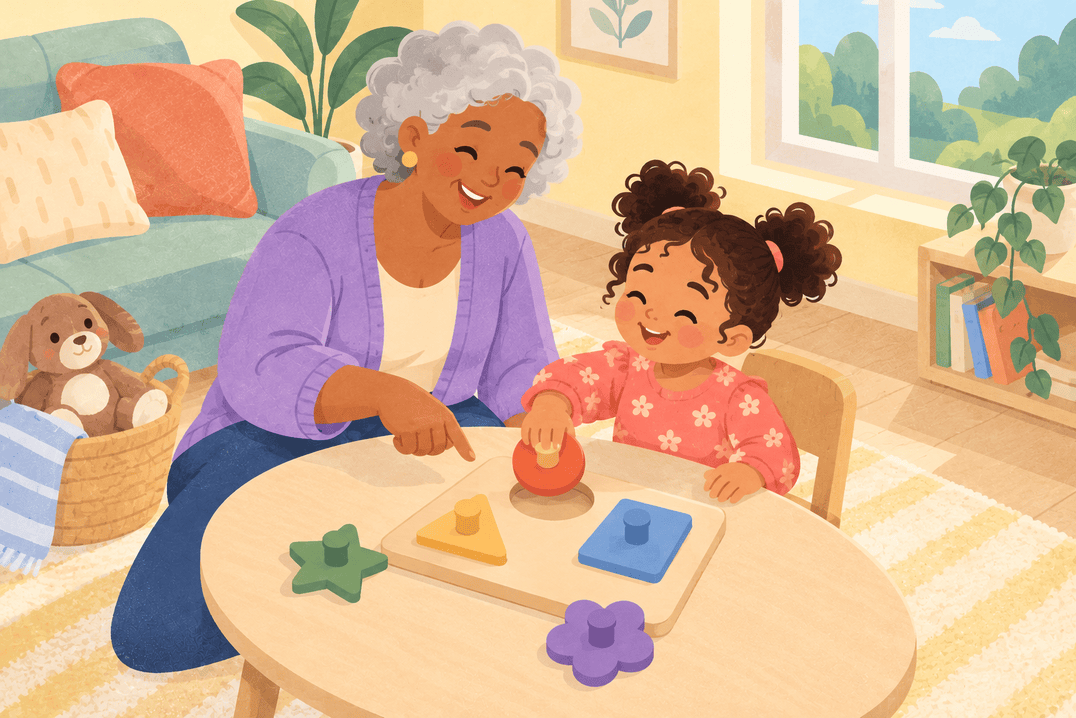
At twenty eight months, play can give your child opportunities to try something new without the pressure of a formal lesson. A useful activity offers a manageable challenge, room to repeat and adult help when needed. It does not need to prove that the next developmental milestone has arrived early.
Offer one idea and see what happens
A simple puzzle, large blocks or an age suitable toy with a safe mechanism can invite investigation. Show how something works if your child is interested, then let them try in their own way. You can help before frustration takes over.
Choose intact materials intended for this age. Avoid loose magnets, accessible batteries and small parts from older children’s sets. Our toddler play guide offers alternatives that can be adapted to your space and your child’s abilities.
Put language into the activity
Describe what is happening using short useful phrases. Words about actions or position can fit naturally when a toy moves, a block falls or something goes into a container. Leave pauses so your child can add a word, gesture or idea.
Our conversation guide for twenty five months explains how to expand a child’s phrase without demanding repetition. If your child uses a recommended communication aid, include it in play rather than reserving it for formal practice.
Let pretend play stay flexible
A doll can join a pretend meal, or a suitable toy can become part of an imagined journey. Our pretend play guide describes ways to join in. Follow your child’s idea instead of insisting on the story you planned.
You can offer a new action and accept that your child may return to a familiar one. Repetition and imaginative exploration can exist together. Neither the complexity of the story nor the number of toys is a reliable measure of development by itself.
Make movement enjoyable and safe
Provide opportunities to move in a clear safe space and adjust the activity to current ability. A suitable ball can be rolled or kicked; a familiar song can invite movement. An adult remains responsible for supervision and the setting.
Jumping with both feet off the ground appears in the thirty month checkpoint. It is not a compulsory twenty eight month performance and should not be encouraged by jumping from furniture. Ask for advice if movement is painful, unusually difficult or changing in a concerning way.
Keep practice separate from assessment
Twenty eight months sits between the two year and thirty month checkpoints. A playful opportunity is different from requiring the same test again and again. If earlier skills are missing, your child loses an ability or something worries you, contact your clinician now.
Mention what helps participation and what remains difficult. If a therapist is involved, ask how everyday play can fit their plan. General activity ideas can support connection while help is arranged; they should not replace an individual assessment or be presented as guaranteed treatment for a delay.
References
- CDC: Developmental milestones at two years (opens in a new tab)
- CDC: Developmental milestones at thirty months (opens in a new tab)
- NHS Best Start in Life: Playtime and bonding with toddlers (opens in a new tab)
- American Academy of Pediatrics: The power of play (opens in a new tab)
- NHS: Helping your baby learn to talk (opens in a new tab)
- NHS: Baby and toddler safety (opens in a new tab)
- CDC: Getting help with developmental concerns (opens in a new tab)

Lifeing Editorial
Stories for a little more understanding, a little more reassurance, and the everyday moments in between.
Related posts
Twenty five month old toddler: Encouraging Conversation and Shared Play