
Twenty five month old toddler: Encouraging Conversation and Shared Play
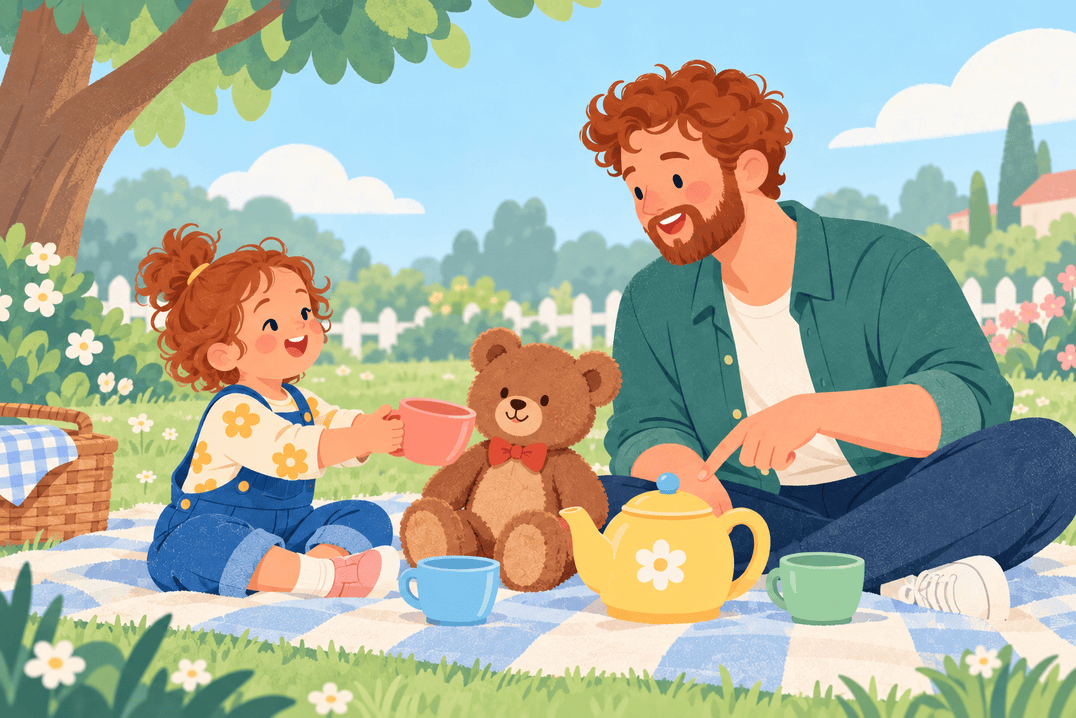
At twenty five months, conversation may begin with a short phrase, a gesture towards something interesting or a repeated request to play again. You can build on that invitation without turning every interaction into a lesson. The same approach helps when your child spends time alongside other children.
Add a little to what your child says
Respond to the meaning of an attempt and model a slightly fuller phrase. If your child says “car gone,” you might answer, “The car went away.” You do not need to demand that the new sentence is repeated back correctly.
Pause after a question or comment. Reduce competing background noise when possible and use the languages that feel natural in your family. An ordinary exchange during dressing or tidying can be useful even when there is no separate time for a planned activity.
Let a shared book become a conversation
Follow the picture your toddler notices rather than reading every word in order. You can name an action, wonder briefly what is happening or respond to a familiar word. If your child returns to the same page, that can be part of the enjoyment.
Keep questions balanced with comments. A sequence of naming tests can leave little room for your child to initiate. The aim is a shared experience, not proving how many labels they remember.
Support play alongside other children
Young toddlers may play beside each other without cooperating for long. Stay nearby to help with conflicts and show simple turns when the moment suits them. Two children reaching for the same toy usually need adult support rather than a lecture about generosity.
Offer safe space and appropriate materials, and intervene if someone is being hurt. A short enjoyable meeting can be more manageable than a long session that continues after both children are tired. Do not expect adult standards of sharing because your child has turned two.
Use pretend play as an invitation
A simple pretend meal for a toy or a vehicle journey can give words a useful setting. Our pretend play guide suggests ways to join without taking over. Follow your child’s current skills rather than expecting an elaborate story.
If nursery is involved, our communication support guide can help you share familiar phrases, gestures and any existing support plan. Differences between settings are useful information, not a competition over which adult sees the best performance.
Keep earlier concerns in view
Twenty five months is between the two year and thirty month checkpoints. Our two year guide explains the earlier observations. There is no separate compulsory twenty five month list in the guidance used here.
If your child is not combining words, earlier skills are missing or communication worries you, seek advice rather than waiting for thirty months. Loss of an ability deserves prompt assessment. Enjoyable conversation and play can continue alongside professional support, without making your child pass a home practice programme before help is sought.
References
- CDC: Developmental milestones at two years (opens in a new tab)
- CDC: Developmental milestones at thirty months (opens in a new tab)
- NHS: Helping your baby learn to talk (opens in a new tab)
- NHS Best Start in Life: Playtime and bonding with toddlers (opens in a new tab)
- American Academy of Pediatrics: The power of play (opens in a new tab)
- American Academy of Pediatrics: Language delays and assessment (opens in a new tab)
- CDC: Getting help with developmental concerns (opens in a new tab)

Lifeing Editorial
Stories for a little more understanding, a little more reassurance, and the everyday moments in between.
Related posts
Twenty four month old toddler: Looking at Development Around Age Two