
Twenty one month old toddler: Balancing Independence and Reassurance
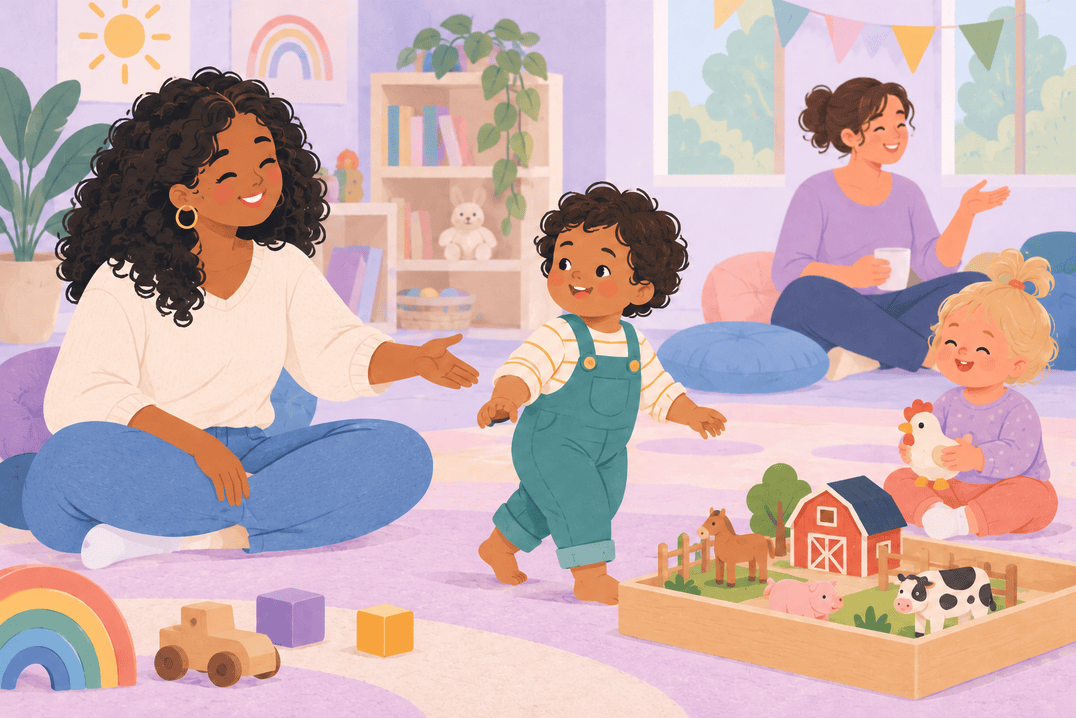
At twenty one months, a toddler can want to do something alone and then urgently want your help. That change does not need to become a contest over independence. Give them a manageable part of the task, remain available and keep the safety decisions with the adult.
Choose a task with room for help
Let your child put an age suitable toy into its basket or choose a book to bring to you. Offer assistance when needed without treating it as failure. Participation can be brief; you do not need to extend a task after interest has faded.
Avoid choices that are not real. If it is time to leave, you might offer a choice of which suitable coat to wear rather than ask whether your child wants to go. Keep the wording short and allow a gesture to answer.
Make reassurance predictable
A familiar adult, a short goodbye and a clear handover can help with separations. Tell your toddler you are leaving rather than disappearing without notice. Agree with the other caregiver what usually offers comfort and how they will let you know if settling is difficult.
If the concern is mainly at night, our bedtime separation guide addresses that situation. Needing reassurance does not automatically mean you should cancel every separation or remove comfort to make a child more independent.
Coordinate with other caregivers
Share the words, gestures and routines your toddler understands. Our nursery communication guide offers a simple way to record useful information. Include what your child enjoys as well as the moments that are difficult.
If an existing care plan recommends a communication aid or an adapted activity, make sure it is available in each relevant setting. Consistency means supporting the child across places, not requiring every adult to perform an identical script.
Respond to frustration before adding a lesson
When an attempt goes wrong, name the feeling briefly and offer help. If your child is too upset to take in an explanation, return to it later. Our nineteen month guide explains ways to support communication during big feelings.
Keep unsafe options unavailable even when disappointment follows. You can stay calm and comforting while preventing an action that could hurt someone. Ongoing distress or behaviour that makes family life difficult deserves support from a health professional.
Check the developmental picture
Twenty one months falls between the eighteen month and two year checkpoints. There is no special requirement to complete a new list of skills on this monthly birthday. Look at earlier abilities and progress across communication, movement, play and daily participation.
Ask for advice if earlier skills are absent, your child loses an ability or hearing or language concerns arise. Do not assume that needing reassurance explains a developmental difficulty. Concrete examples from home and other settings can help a clinician decide what further assessment or support is useful.
References
- CDC: Developmental milestones at eighteen months (opens in a new tab)
- CDC: Developmental milestones at two years (opens in a new tab)
- NHS: Separation anxiety in babies and young children (opens in a new tab)
- NHS Best Start in Life: Helping toddlers with emotions (opens in a new tab)
- NHS Best Start in Life: Playtime and bonding with toddlers (opens in a new tab)
- NHS: Helping your baby learn to talk (opens in a new tab)
- CDC: Getting help with developmental concerns (opens in a new tab)

Lifeing Editorial
Stories for a little more understanding, a little more reassurance, and the everyday moments in between.
Related posts

Twenty seven month old toddler: Building Confidence With Small Choices