
White discharge: When Appearance and Other Symptoms Matter

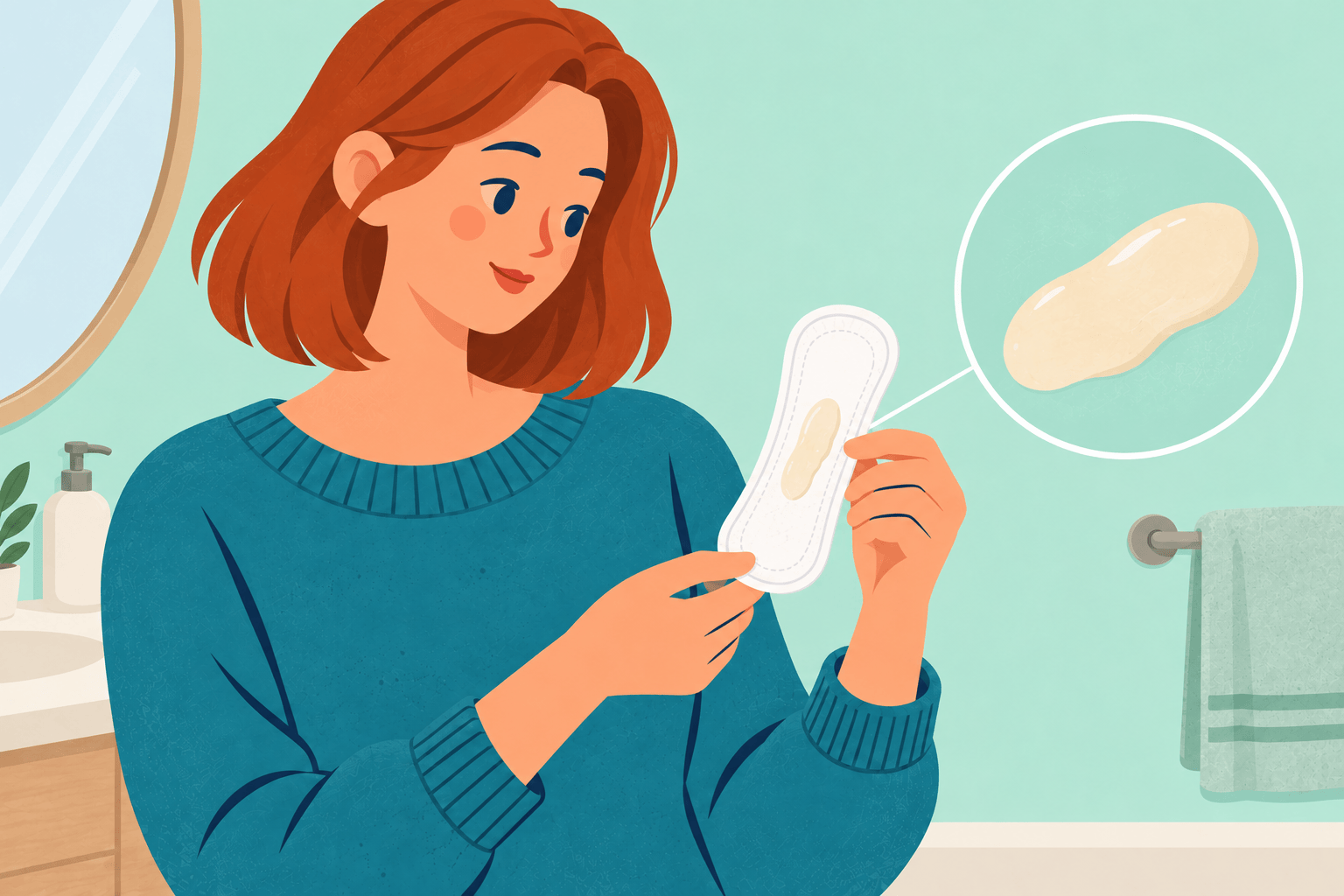
White discharge is not automatically a yeast infection. Normal vaginal fluid can be white, and its texture can vary. What matters is whether the discharge is different for you and whether there is itching, soreness, odor, bleeding, or pain alongside it.
Describe more than the color
A useful description might be “white fluid without discomfort” or “new white clumps with burning.” Those accounts give a clinician more information than simply selecting white on a color chart.
The cycle discharge overview describes everyday variation. There is no requirement for normal fluid to be completely transparent, and no reason to treat an otherwise familiar appearance just to change its color.
Understand why symptoms overlap
A vaginal yeast infection may cause thick, curdlike discharge with marked itching, soreness, redness, or burning. However, none of these symptoms identifies yeast with certainty. Bacterial vaginosis can also produce whitish discharge, often thinner and with a noticeable odor.
Irritation and other causes can affect the vulva or vagina too. A diagnosis therefore depends on the whole history and, when appropriate, examination and testing. Finding yeast in a sample without symptoms does not necessarily mean treatment is needed.
Be cautious about repeated treatment
Even someone who has had confirmed thrush before can mistake another condition for it. If symptoms continue after a pharmacy treatment or return soon afterward, arrange assessment instead of repeatedly trying the same product.
Our guide to thick discharge with itching explains questions about antifungal treatment. Tell the clinician about pregnancy, diabetes, medicines, and any products you have already used. These details can affect the treatment plan.
Know what to do next
For a new or bothersome change, book a clinician or sexual health appointment. You can ask whether a sample is needed and what its results would mean. The swab testing guide can help you prepare.
Do not assume that a white color explains pelvic pain or unusual bleeding. Those symptoms need their own assessment; new pelvic pain with discharge warrants prompt medical advice. Seek emergency care if pain is severe or you feel faint or very unwell.
While arranging care, avoid inserting cleansing products or home remedies. The aim is to identify the cause of discomfort, not to remove all normal vaginal fluid.
References
- NHS: Vaginal discharge (opens in a new tab)
- CDC: Vulvovaginal candidiasis (opens in a new tab)
- Office on Women’s Health: Vaginal yeast infections (opens in a new tab)
- Office on Women’s Health: Bacterial vaginosis (opens in a new tab)
- CDC: Conditions causing vaginal symptoms (opens in a new tab)
- NHS: Pelvic inflammatory disease (opens in a new tab)

Lifeing Editorial
Stories for a little more understanding, a little more reassurance, and the everyday moments in between.
Related posts

Withdrawal and pregnancy prevention: What to Know About Reliability