
Cow’s milk as a drink: Timing the Transition From Infant Feeds
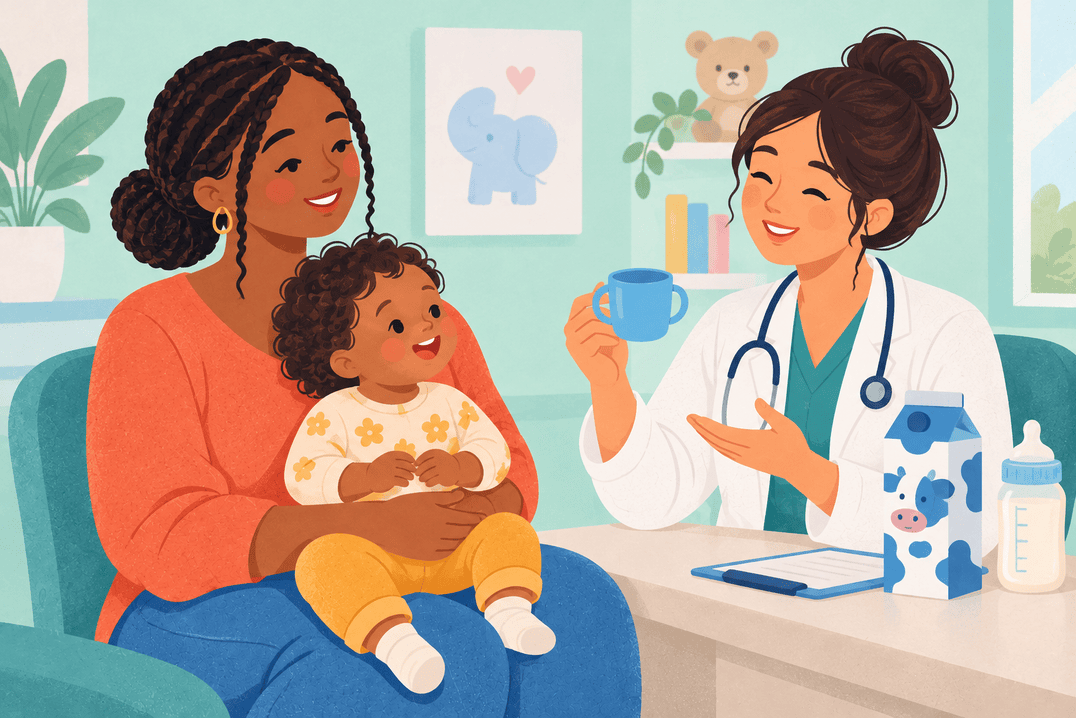
Ordinary cow’s milk can usually become a main drink from twelve months. Before then, breast milk or a suitable infant formula remains the main milk drink. Reaching the first birthday does not mean you must stop breastfeeding or change every feed overnight.
Separate a drink from an ingredient
Pasteurised cow’s milk can be used in cooking from around six months, and suitable dairy foods can join first meals. That is different from giving a large drink of cow’s milk instead of breast milk or formula.
Before twelve months, ordinary cow’s milk does not provide the right balance of nutrients to replace infant feeds. It is low in iron, and its protein and mineral load is unsuitable as the main milk at this age. The label whole milk does not make it equivalent to infant formula.
Choose a suitable milk after the first birthday
Pasteurised, unsweetened whole cow’s milk is a common option for young toddlers. Guidance about lower fat milk varies by country and by a child’s growth and health needs. Ask your clinician before making a change for weight concerns or a medical condition, rather than applying adult diet advice.
Do not give raw or unpasteurised milk. You also do not generally need to buy a toddler milk simply because the formula brand offers a product for the next age group. A prescribed nutritional feed is a different situation and should continue according to the clinical plan.
Breastfeeding can continue alongside a varied diet. If your child still breastfeeds, discuss their overall intake instead of assuming they must also drink a fixed amount of cow’s milk.
Let meals grow alongside milk
Milk supplies useful nutrients, but too much can fill a toddler up and displace other foods. Dairy intake also includes foods such as yogurt and cheese. More milk is not automatically better, especially when a child is eating few iron sources.
Our iron food guide offers practical choices to include in meals. If milk dominates the day, bring a short account of drinks and food to your child’s health appointment. The useful question is whether the whole diet supports growth and nutrient needs.
Offer milk in an appropriate cup as the transition develops. Our cup guide explains gradual practice and changes to bottle routines. Keep comfort and feeding decisions separate where possible, so every upset does not automatically become another milk drink.
Get advice when dairy is excluded
A child with a suspected or confirmed milk allergy needs an individual replacement plan. Ordinary goat’s milk is not an automatic solution, and plant drinks vary substantially in protein, energy and added nutrients.
Before twelve months, ordinary plant drinks do not replace breast milk or infant formula. After that, ask which fortified option and wider diet meet your child’s needs. Our vegetarian meals guide explains why calcium is only one part of that assessment.
References
- CDC: Cow’s milk and milk alternatives (opens in a new tab)
- NHS: Drinks and cups for babies and young children (opens in a new tab)
- British Dietetic Association: Complementary feeding statement (opens in a new tab)
- CDC: Iron in infant and toddler nutrition (opens in a new tab)
- CDC: Foods and drinks to avoid or limit (opens in a new tab)

Lifeing Editorial
Stories for a little more understanding, a little more reassurance, and the everyday moments in between.
Related posts
Cradle Cap: Gentle Care for a Flaky Scalp